So you’ve built the app. Great — now what? That’s the point most developers get stuck at, because an app with no downloads is basically invisible, no matter how good it is. A fair number of people end up looking into options to buy app installs, meaning paying through real ad platforms to get actual downloads moving instead of just… waiting and hoping something clicks organically.
This isn’t a loophole, and it isn’t a hack either, whatever the name might suggest. Let’s actually get into what it means, how it plays out once money’s involved, what matters if you’re buying from India, and where things cross into territory you’d want to avoid.
What Does It Even Mean to Buy App Installs?
In plain terms, buy app installs means paying for real downloads through verified channels — Google Ads, Meta, that sort of thing — rather than bots pretending to be users.
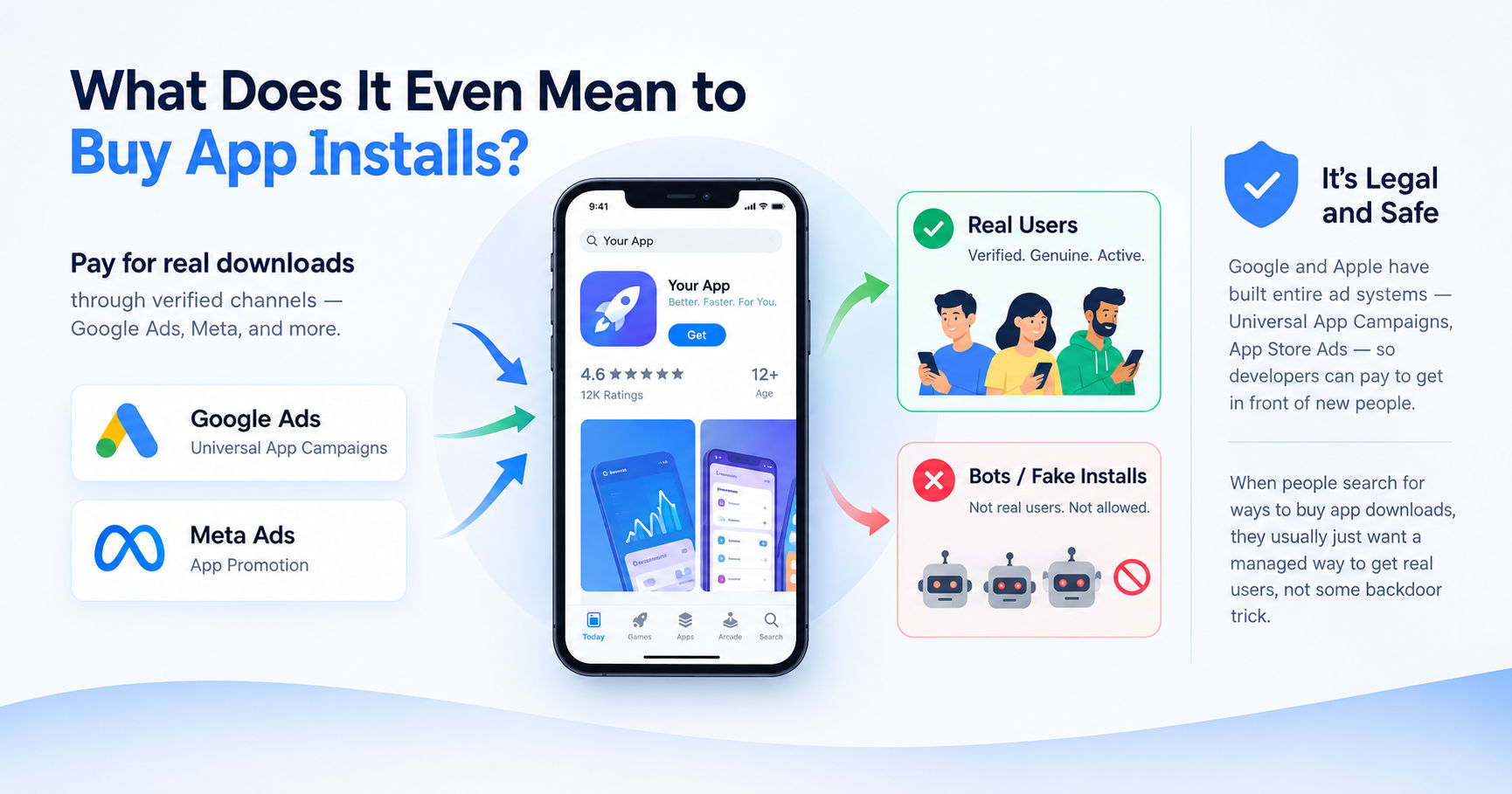
A lot of people assume this sits somewhere shady, legally speaking. It doesn’t, not when done right. Google and Apple have literally built entire ad systems — Universal App Campaigns, App Store Ads — for this exact reason, so developers can pay to get in front of new people. When someone searches around for ways to buy app downloads, nine times out of ten they just want a managed way to get real users, not some backdoor trick.
The thing that actually separates a legit purchase from a scam? Where the traffic’s coming from. If it’s real platforms and real people, you’re fine. If someone’s offering you 10,000 installs overnight for ₹500, ask yourself how that math even works.
How Does This Process Actually Play Out?
Short version — an app install service sets up campaigns on verified networks, runs them, and keeps tweaking based on who actually sticks around, not just who taps install once and vanishes.
Roughly, here’s what it looks like in order:
Your listing gets looked at first — keywords, screenshots, the whole page — before a single rupee goes toward ads. Then someone defines the audience: where they are, what device, roughly what age and interests. Campaigns go live, usually on Google or Meta to start. From there it’s daily monitoring — cost per install matters, sure, but so does what happens after someone opens the app for the first time. And the budget keeps shifting toward whatever’s actually working, not whatever just looks good on a report.
That last bit trips up a lot of cheap vendors. If “installs delivered” is the only number they can tell you, they’re probably not tracking anything beyond that — which matters a lot if you actually want install growth that means something.
Why Would Anyone Pay for Installs Instead of Just Growing Organically?
Mostly because organic takes forever, and most new apps don’t have months to spare before they run out of runway or patience. A mobile app promotion service can provide that paid push and buy visibility early — which can turn into organic discovery down the line, but only if people actually like using the app once they get there.
Buying Installs | Growing Organically | |
How fast | Days, maybe a couple weeks | Months, sometimes a lot longer |
What it costs | Ongoing ad spend | Barely any money, a ton of time |
Can you predict it | Mostly, budget controls volume | Not really |
Does it last | Only as long as you keep paying | Builds and stays without constant input |
Good for | New launches, hitting funding targets, festive-season pushes | Keeping people once they’re already in |
People who’ve actually done this long enough tend to stop treating these as opposites. Paid installs get eyes on the app. Organic stuff — ASO, word of mouth, decent content — is what keeps those eyes around.
What Should Buyers in India Actually Be Careful About?
Two patterns show up constantly here: choosing a vendor on price alone without checking anything else, and getting sold bot-driven installs dressed up to look legit.
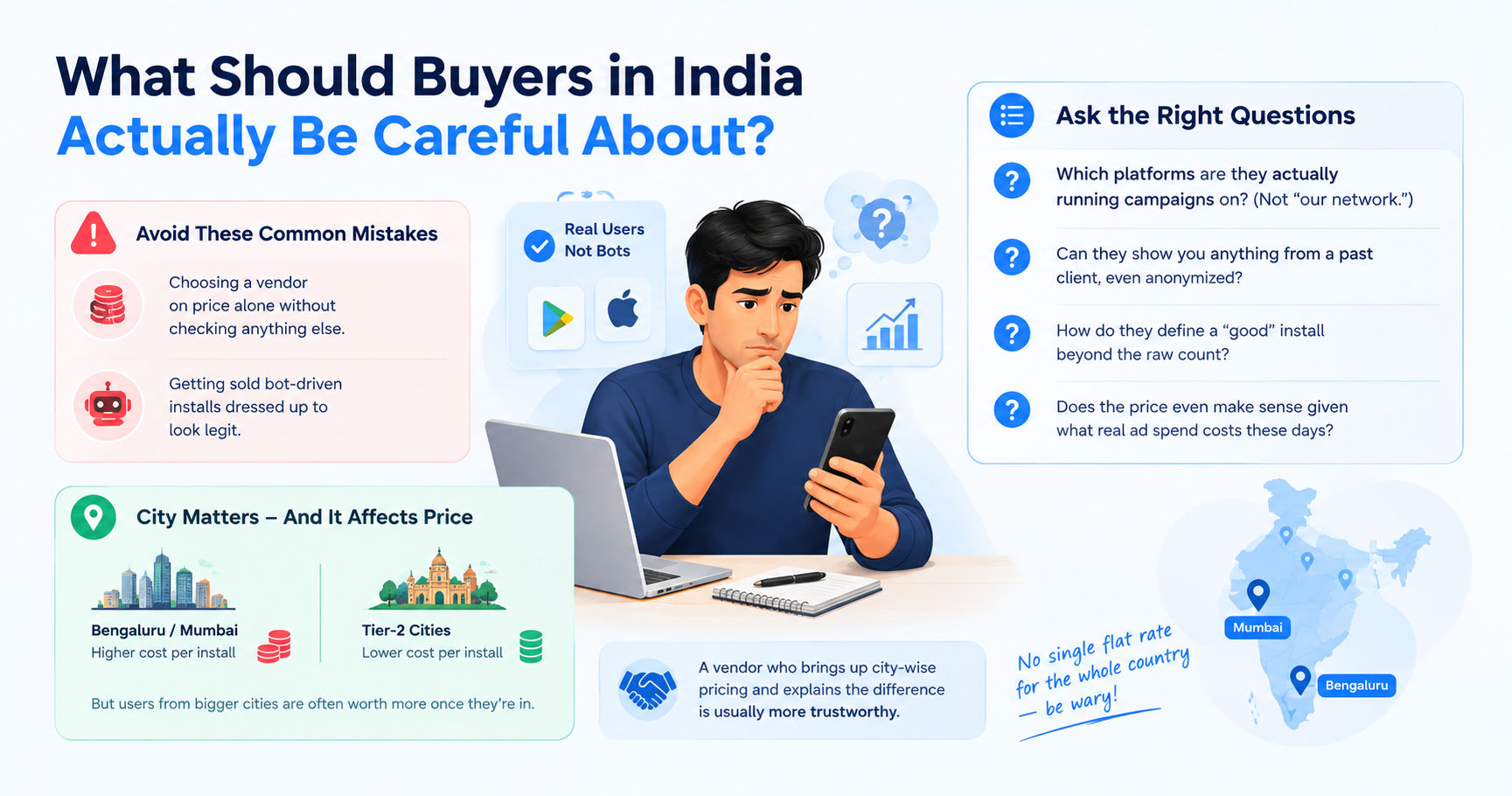
Before you purchase app installs, it’s worth asking a few blunt questions. Which platforms are they actually running campaigns on — and no, “our network” isn’t an answer. Can they show you anything from a past client, even anonymized. How do they define a “good” install beyond the raw count. And does the price even make sense given what real ad spend costs these days?
City matters too, more than most people realize going in. A download campaign aimed at Bengaluru or Mumbai is going to cost more per install than one running in a tier-2 city — but those users are often worth more once they’re in. A vendor who brings this up unprompted is usually more trustworthy than one offering a single flat rate for the whole country.
Is There Any Kind of Rulebook for This?
Not a formal certification, no — but Google Play and the App Store both have developer policies that draw a pretty clear line between normal mobile app promotion and stuff that’ll get you banned.
Google flat-out bans incentivized installs designed to game rankings, plus anything coming from bots or automated scripts. Apple’s guidelines cover similar ground under App Store Review. None of it’s optional — break it, and you’re looking at a flagged account at best, a pulled app at worst.
The line to remember: paying for installs through real, recognized ad platforms is just normal marketing. Paying some random network for fake numbers is a violation, and it usually shows up pretty fast once anyone checks retention.
Is Buying Installs Actually a Sustainable Way to Grow?
It can be — especially when you buy app installs from real people and the strategy doesn’t just stop once someone’s downloaded the app. Things get ethically murky when installs are faked, or when someone’s paid to download and delete within the hour, which wastes money and tricks the app store’s algorithm into thinking there’s demand that isn’t real.
“Sustainable” here has nothing to do with the environment, to be clear — it’s about whether the growth actually sticks. Fake installs give you a number and nothing else. No users, no revenue, nothing for anyone evaluating the app to find once they dig in. When you buy app installs through legitimate campaigns, real paid installs put actual people into a funnel where retention and engagement can genuinely build. That’s just a better use of whatever budget you’ve got — and honestly, it’s the real difference between buying growth and buying the illusion of it.
Where That Leaves You
Buying app installs won’t fix an app nobody wants to use — but it can get a genuinely good one in front of people faster than waiting on organic reach ever would. What it’s actually worth depends entirely on what happens after someone installs it: do they come back, does the app hold their attention, does that early install growth turn into something real.
Before spending anything, it’s worth actually understanding how these campaigns get structured, what the app stores allow, and how upfront a vendor’s willing to be about where their traffic comes from. That part, more than the install number itself, is usually what decides whether this was worth doing.
Frequently Asked Questions
Is it legal to buy app installs?
Yes, as long as they come through legitimate ad platforms. This is standard practice, not some workaround.
Could buying installs get my app banned?
Only if they’re fake, bot-generated, or incentivized in a way that breaks platform rules. Installs from real campaigns are fine.
What does this typically cost in India?
Depends a lot on category and city. Fintech or gaming apps cost more per install than a basic utility app, and metro traffic costs more than tier-2 or tier-3.
Can I run Android and iOS installs as separate campaigns?
Yes — usually they are run separately anyway, since cost and user behavior differ enough between the two that lumping them together doesn’t make sense.
Does this help with app visibility or ranking?
Indirectly, yes. Steady, genuine install growth is one of the signals app stores look at — though it works best alongside actual app store optimization, not instead of it.